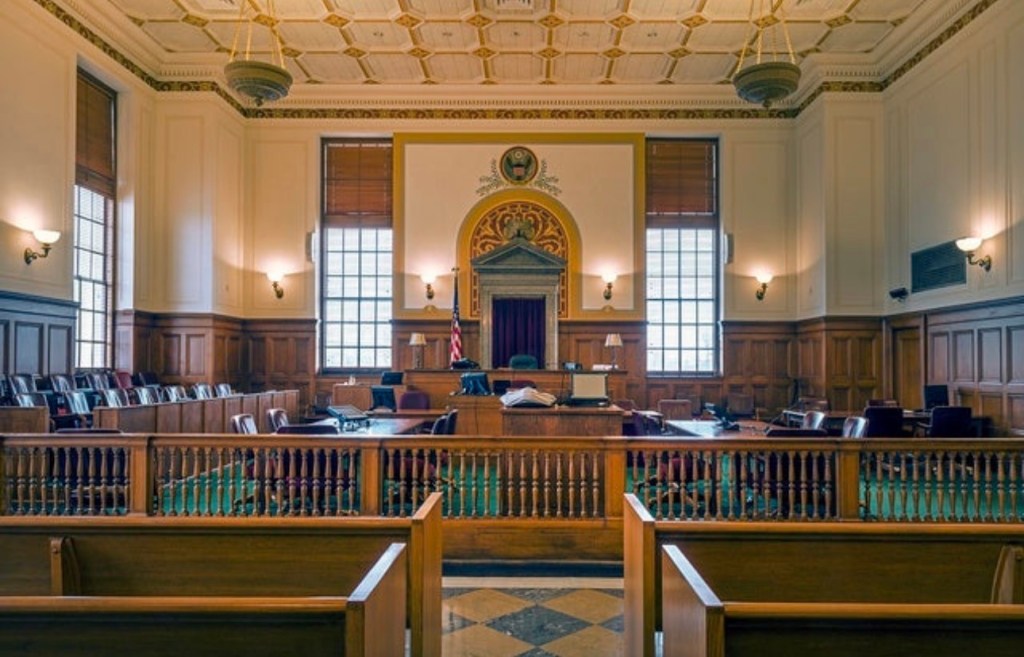
I didn’t realize then that jury duty wouldn’t teach me what justice is, only how fragile it feels when you’re the one holding it.
My wife, Colleen, gets picked for jury duty all the time. She’ll open the mailbox, see the envelope, and groan like it’s the universe reminding her she hasn’t suffered enough. She fills out the form, shows up, gets selected, serves, comes home—done. A civic chore. A box checked.
I think she enjoys it.
A small smile. “Oh, this makes number four… or is it five?”
Me? I always filled out that questionnaire like a kid raising his hand in class. Pick me. Let me do my part. It felt a little naïve—this idea that I could step into a courtroom and somehow “do justice.” I’d never served before, and part of me wanted the full experience. I wanted to know what it felt like to sit in that wooden box and hold a stranger’s future, even briefly, in my hands.
So when the summons finally arrived, I felt… weirdly proud. Like I’d been invited into a club I’d only ever watched on reruns of Matlock.
Jury duty starts the same way all bureaucratic journeys start: in a room full of chairs that look like they were bought from a secondhand store and coffee that tastes like it came free with them.
Fifty or sixty of us waited together. Strangers pretending we weren’t sizing each other up, wondering who looked “juror-ish” and who was silently praying to be sent home. Some scrolled through their phones. Some sat perfectly still, as if they’d been called to the principal’s office.
I watched the room and thought about how strange it was that justice begins here: with a bunch of ordinary people caught between boredom and nerves.
I was excited and a little apprehensive. When I get nervous, I tend to wear one of two expressions: the Resting Irritated Look, okay, okay, it’s really a resting bitch face, or a grin that makes me look slightly unhinged. I’m pretty sure it was the second one that day.
When they called my name, the nerves finally hit. This was the moment I realized it wasn’t theoretical anymore.
The judge was steady, practiced, almost gentle. The attorneys watched us like puzzle pieces they were trying to fit into the right shape. The questions were simple enough, asking about our backgrounds, jobs, and biases, but each answer seemed to add a little more civic duty to the room.
And then:
“Juror Number Ten, please take a seat.”
Juror Number Ten. That was me. I was in.
Definitely grinning now and probably looking a little unhinged. The silly part of me, the kid who always raised his hand in class, felt triumphant. The adult part felt something heavier settle onto my shoulders.
A decision would be made, and I was now one of twelve people responsible for making it.
For the first time that day, it occurred to me that maybe they should have picked someone more responsible. But there it was. I’d gotten the job. And I was determined to do my best.
Inside the jury box, you think you know what it means to listen. Courtroom listening is something else entirely. They gave me a pen and a yellow legal pad. You’d think that would make it easier. It didn’t.
I can pay attention, but unfortunately I’m also a fidgeter. A squirmer. The kid in the back of the classroom who wants to pace just to stay awake. All of which is frowned upon by the judge. So there I sat, trying very hard to hold still. Trying to focus past the echo of the room.
Watching someone’s hands tremble as they took an oath. Listening to every word because you know someone’s life has narrowed down to whether twelve strangers believe them.
I spent hours absorbing the details of people I had never met: how they spoke, how they avoided eye contact, how their voices changed under pressure.
As a nurse, I’m used to reading people. But this was different. There was no chart. No vitals. No lab work to sort through, just their truth, however they chose to tell it.
Our job was to sort through it the best we could. Maybe that’s an oversimplification, but that’s what it felt like at the moment.
On the third day, we heard the closing arguments and retired to the deliberation room with our notes, observations, and more than a few doodles.
The room felt like a breakroom stripped of anything relaxing—just a long table, a handful of chairs, and the knowledge that none of us were leaving until we reached a decision. Twelve people with different backgrounds. Twelve minds trying to make sense of the same story. Deliberation isn’t loud. It’s steady, slow… and honestly, a little boring.
We never really exchanged names. The instructions were clear: don’t discuss the case outside the room, don’t speak with the attorneys, and don’t discuss the case with one another except during deliberations.
It’s a series of small agreements and occasional disagreements. You learn who is patient, who is angry, who needs more time, who needs reassurance, and who sees the world through a lens that has been cracked and glued back together one too many times.
We talked and listened. We circled the facts like chess players, pushing a little here, pulling a little there, until the room finally felt balanced.
What surprised me most was how seriously everyone took the responsibility. Nobody was trying to rush through it. Nobody was treating it like an inconvenience. We were all trying, in our own imperfect ways, to get it right.
Then came the paperwork. So much paperwork.
At some point, the clerk asked, “Who will be the foreman?”
The room went quiet. Then everyone’s eyes shifted toward me.
Maybe it was the tie. Maybe they sensed I wanted the full jury experience. I suspect it was the slightly unhinged grin.
Either way, suddenly I was the foreman. The realization hit me a moment later. I would be the one reading the verdict aloud. My voice would become part of the official court record, preserved by the stenographer long after everyone in the room had gone home. It wasn’t an important role, but it felt important.
Just my small part in the long machinery of justice.
We had reached a verdict. Walking back into the courtroom felt like wading through water, heavy, muffled, slow.
When the judge read our decision, I wasn’t thinking about whether we were right. I was thinking about the weight of twelve strangers trying their best with imperfect information. Afterward, we were dismisseåd. That was it. Back to life. Back to work, errands, grocery lists.
But something stayed with me: a sense of responsibility I hadn’t expected.
It’s easy to talk about justice like it’s some towering institution, a marble building where wiser people make the hard choices. But sitting in that courtroom, I learned something else:
Justice isn’t a system. It’s people.
Ordinary people. People like me, like you, like the strangers sitting next to us in plastic chairs with bad coffee. Jury duty didn’t make me feel important.
It made me feel connected to my community.
It reminded me that fairness isn’t automatic. Justice is something we create, moment by moment, by showing up, paying attention, and trying our best to understand what’s right in front of us.
Some experiences don’t leave you with answers. Jury duty didn’t teach me what to think; it taught me how to see.
To see how the attorneys built their case piece by piece. To see how the officers did their jobs, steady and methodical. To see how the defendant did their best to remain composed, to stay guiltless in the eyes of twelve strangers. I got to see the gears of justice turning—not perfectly, not dramatically, but humanly. Maybe that’s all justice really is: ordinary people doing their best with imperfect information.
Dennis
Author Note
Dennis D. Montoya is a fantasy and literary fiction writer exploring themes of connection, memory, and resilience. He writes from the intersection of storytelling and healthcare, where empathy is both a craft and a calling.
Thank you, subscribers. Every time you show up, you help turn a small story into a shared expereince, and I’m grateful for that.
Discover more from Dennis D Montoya
Subscribe to get the latest posts sent to your email.

